Living Here Is Like Going to the Zoo Without Bars or Cages
By Carl Kratz, Broker & Realtor | Century 21 Integra Realty
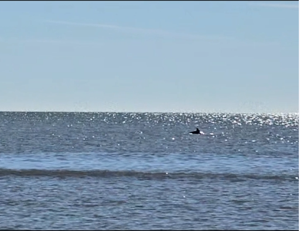
I get a pang of joy every time I drive over the bridge onto Hilton Head Island and spot a pod of dolphins working their way through MacKay Creek below me.
Every time. After thirty years.
That's the thing about living here that nobody warns you about. You never stop noticing it.
I say the same thing to every buyer I work with from up North who's never seen dolphins in the wild. They ask me what it's like. I tell them it's like going to the zoo without bars.
No glass. No enclosures. No feeding schedule. Just wild animals living their lives in the same water you're kayaking through, twenty feet off your bow.
That's just a Tuesday here.
200 Dolphins. Year-Round. No Reservation Required.
Roughly 200 Atlantic bottlenose dolphins call the Hilton Head area home full-time. Not seasonally. Not as tourists passing through. They live here — in the May River, MacKay Creek, Calibogue Sound, Broad Creek, and the Intracoastal Waterway.
Which means on any given morning, on any given commute across the bridge, on any given kayak paddle — you might see them.
Not on a special occasion. On a Wednesday.
My wife Carla is a retired marine biologist who spent her career studying saltwater ecosystems — flatfish primarily, but saltwater is saltwater, and she knows these coastal systems well. When I tell you these waters are something special, I'm not a real estate agent trying to close a deal. I'm a guy whose wife spent decades in the field and chose to live here.
That tells you something.
The May River — When There Aren't Too Many Boats
Paddling on the May River gives you a zen type of peace.
Provided there aren't a ton of boats on the river. Then it's more like the sandbar where all the boaters go to have a little fun — which is its own kind of Lowcountry experience, just a different one.
But on a quiet morning — early, before the weekend crowd shows up — the May River is as calm and still as anything you've ever been on. Herons standing in the shallows. Ospreys working overhead. And if you're patient and you're quiet, dolphins moving through the creek like they own it.
Because they do.
Strand Feeding — One of Only Two Places on Earth
My wife's colleagues have sent her videos of it. It's something else.
Strand feeding is a hunting technique documented in only two places in the entire world — the Lowcountry of South Carolina and Georgia, and certain coastal areas of Australia. That's it. You won't see this in Florida. You won't see it on Cape Cod. You won't see it almost anywhere else on the planet.
Here's what happens: a group of dolphins herds a school of mullet toward a mudflat at low tide. They work together — coordinated, deliberate — pushing the fish toward the bank. Then they beach themselves momentarily, scoop up the fish, and slide back into the water.
It's a learned behavior, passed from mother to calf through generations. The dolphins doing this on the May River today were taught by their mothers, who were taught by their mothers. These animals have been living and hunting in these specific waters for generations.
That's not a tourism brochure line. That's just what's happening out there while you're driving to the grocery store.
Respecting the Boundaries — This Is Important
Part of living here is understanding something.
These dolphins are not a show. This is their home. You're the visitor — even if you own the waterfront property.
Watch from the bank. Keep distance on the kayak. Don't chase pods with a motorboat. Let them come to you, and sometimes they will. See them up close while respecting healthy boundaries for everybody.
The people who live here long-term understand this without being told. It's part of the culture. You'll figure it out fast, and you'll be better for it.
Where to See Them Without Getting on a Boat
You don't need a boat. Though a boat helps.
From land, try these spots:
- MacKay Creek — visible right from the bridge on your way onto the island
- Dolphin Head in Hilton Head Plantation — named for a reason
- Bluffton Oyster Factory Park — May River access, especially good at low tide
- Skull Creek Dockside — waterfront spot with regular dolphin activity
Watch the tide. Dolphins are most active when the tide is moving — incoming or outgoing. A lone seagull hovering and diving is often your first sign that dolphins are working below the surface.
Once you know that, you start reading the water differently everywhere you go.
The Honest Bottom Line
I've been living in the Lowcountry for thirty years. The dolphins on the way to work still get me.
If you're coming from somewhere that doesn't have this — and almost everywhere does not have this — I want you to understand what you're actually gaining when you move here. It's not just a house near the water. It's a front-row seat to something wild and real every single day.
That's not something you can put in a listing description. But it's real.
If you want to know which neighborhoods put you closest to the water — the May River side, the sound side, the Intracoastal — and what living near each one actually feels like day to day, let's talk.
Carl Kratz Broker & Realtor | Century 21 Integra Realty 843.247.9373 sclowcountryrealestate.com
Call or text me directly. You'll get me.
Sources: Local Life SC (locallifesc.com) | Palmetto Bluff Conservancy (palmettobluff.com) | The Dolphin Project | SC Department of Natural Resources
Category: Lowcountry Lifestyle | Nature | Tags: dolphins Hilton Head, May River Bluffton, MacKay Creek, strand feeding, Lowcountry wildlife, relocating to Hilton Head SC