Buyers from the Northeast and Mid-Atlantic often ask me some version of the same question:
"Are homes down here built to handle the climate?"
The honest answer is: some are, and some aren't.
What separates them isn't always age or price. It's whether the home has been maintained by someone who understood what the SC Lowcountry actually does to a house - and whether the next owner knows what they're buying into.
I've been living in the Lowcountry since 1996 and selling real estate here since 2009. I also have a construction background. So when I walk through a home with a buyer, I'm not just looking at what it looks like today. I'm looking at what it's going to look like in five years if nobody pays attention.
Here's what you need to know.
The Lowcountry Is Not a Normal Climate
Before you can understand what happens to homes here, you need to understand what makes this environment different from most of the country.
Salt air. Within a few miles of the coast - and that covers most of Hilton Head Island and a good chunk of Bluffton - salt-laden air is constant. It doesn't just cause rust. It accelerates corrosion on metal components, degrades paint and caulk faster, and works into HVAC coils, fasteners, roof flashings, and anything else exposed to the elements. You don't see it happening. You see the results a few years later.
Humidity. The SC Lowcountry is genuinely humid in a way that surprises most transplants. Not just in summer - for most of the year, the humidity is high enough to matter. That means crawl spaces can stay damp, wood moves constantly, and mold finds its opportunities. A house that isn't actively managed against moisture will show it.
Year-round heat and UV. Cooling season runs from April through October. That's not a season - it's two-thirds of the year. The combination of UV exposure and heat cycles degrades roofing materials, exterior paint, caulk, and deck finishes faster than most buyers expect based on their experience up north.
Storms. We're in a coastal storm environment. That means wind events, heavy rain, and the occasional hurricane threat. The relevant question isn't just "has this home flooded" - it's how the structure, the roof, and the drainage have held up over time.
None of this means coastal homes fall apart. It means they require more consistent attention than homes in more forgiving climates. The ones that get that attention hold up beautifully. The ones that don't tend to develop problems that are expensive to fix.
What Actually Deteriorates - and How Fast
Roofs
This is the most consequential system on any home in the SC Lowcountry, and the one where I see the most buyer surprises.
Three-tab asphalt shingles are good for roughly 15 years here. By 20 years, most are done. Architectural shingles last longer, but they're still operating in a harder environment than the manufacturer's warranty contemplates.
Metal roofs are often the top choice for longevity because they generally perform better in storms and hold up better against salt air. Insurers may also look more favorably at metal roofs, but buyers still need to verify coverage guidelines as the roof ages.
Why does this matter beyond maintenance? Because South Carolina insurers are increasingly cautious about roof age. Insurance guidelines change, and every carrier is different, but buyers should verify roof-age requirements before going under contract - especially if the roof is more than 15 years old.
Some carriers may require additional review, limit coverage, move from replacement cost to actual cash value, or decline coverage entirely depending on the age, material, and condition of the roof.
When a buyer is looking at a home with a 22-year-old roof, that's not just a deferred maintenance conversation. It's potentially a day-one insurance problem.
What to ask: How old is the roof, and what type? What does the current insurer say about it? Is there documentation of any recent work? Any repairs should have been done by a licensed contractor. If your roof leaks, it can affect your entire home, and you want to know the work was done right.
HVAC Systems
HVAC systems in most of the country can reasonably last 15-20 years. In the SC Lowcountry, plan on 10-12 years.
The reasons: systems run almost year-round, which puts far more hours on the equipment. Humidity means they're dehumidifying constantly, not just cooling - which adds mechanical stress. And salt air gets into outdoor condenser units and accelerates corrosion on coils and components.
A 14-year-old HVAC system in a Hilton Head home isn't a "monitor it" item. It's a replacement item. And HVAC replacement here runs $6,500-$15,000 or more depending on the system.
One more thing worth knowing: if you're buying in the winter, you're taking a risk with an older HVAC system. When it's too cold outside to run the AC, you can't fully test the cooling side - and that's where the real wear is in this climate. You can test the heat, but heat is the less critical system here.
If the unit is older, try to negotiate an inspection contingency that addresses this, or factor it into your offer.
What to ask: When was the system installed? Has it been serviced regularly? Are there any records?
Exterior Wood and Painted Surfaces
Paint cycles are shorter here. Caulk around windows, doors, and trim is a maintenance item, not a one-time installation.
Wood decks, railings, and siding are particularly vulnerable. They need to be properly sealed, and they need to be checked regularly for signs of moisture intrusion.
When I see paint that's peeling, caulk that's cracked or missing, or wood trim that's soft to the touch, that's not cosmetic. Moisture getting behind surfaces is how rot starts. And rot can be a small repair or a large one, depending on how long it's been going.
What to ask: When was the exterior last painted? Is there any evidence of wood rot, particularly around windows, doors, trim, or any areas where water could pool?
Crawl Spaces
Hilton Head and Bluffton homes with crawl spaces need to be evaluated carefully. A non-encapsulated crawl space is not automatically defective, but in this climate, moisture control matters.
Some crawl spaces perform acceptably when they are dry, well-ventilated, properly graded, and regularly monitored. Others show moisture, mold, insulation damage, wood deterioration, or pest activity.
When I see an open crawl space, the first thing I want to know is: what is the condition of the subfloor, joists, sill plates, insulation, and vapor barrier? Those are the areas most likely to show the effects of long-term humidity or drainage problems.
Soft spots in the floor above, doors that don't close right, or visible moisture staining in the crawl space are all signals worth paying attention to.
Encapsulating a crawl space typically runs $5,000-$15,000 depending on size and what's required. If moisture has already caused structural damage, the cost can move well beyond that.
There's another issue specific to homes near water - lagoons, rivers, tidal creeks, and marsh edges. Critters. Raccoons, opossums, and other wildlife can get up into crawl spaces and cause real damage: burrowing into insulation, chewing on wiring and pipes, and working their way toward the living space.
It's not a deal-breaker, but it's worth asking about and having an inspector look for signs of animal activity, particularly on homes that back up to water or natural areas.
What to ask: Is the crawl space dry and properly ventilated? Is there a vapor barrier? Has it been inspected recently? Is there any evidence of moisture, mold, wood damage, or animal intrusion?
Termites
Every home in the SC Lowcountry should be on a termite bond - a contract with a licensed pest control company that includes annual inspections and treatment coverage.
If a home you're considering doesn't have an active bond, that's worth noting.
The Lowcountry has multiple termite species, including the Eastern subterranean termite and, in some areas, Formosan termites. Formosans are the more aggressive variety and can do significant structural damage that isn't always visible from the surface.
Termite structural damage here can easily exceed $20,000 - and that's a floor, not a ceiling. I've seen it go well beyond that when it's been allowed to progress.
A termite bond and annual inspections aren't optional maintenance. They're the cost of ownership in this climate.
What to ask: Does the home have an active termite bond? When was the last inspection? Any prior treatment history?
Flood Zones and Drainage
I'll separate this from storm damage generally because it deserves its own attention.
Not every home in the Lowcountry is in a high-risk flood zone. Many homes in Bluffton and Sun City Hilton Head are in X zones where flood insurance isn't required by lenders. But flood zone designation and actual flood risk aren't always the same thing.
I'm also seeing more lenders require flood insurance on properties that sit adjacent to a flood zone, even when the home itself is designated X. That's worth verifying with your lender early in the process, not after you're under contract.
Drainage matters. How a lot sits relative to its neighbors, where water goes after a heavy rain, and whether the home has experienced any water intrusion during storms are all important questions. I always ask sellers directly, and I recommend buyers do the same in writing.
For homes that are in AE or other high-risk flood zones, flood insurance is both required by lenders and significant in cost. FEMA policies have a maximum structure coverage limit, and many Lowcountry homes - especially in the luxury segment - need supplemental private flood coverage on top of that.
Getting an accurate insurance quote before going under contract isn't optional.
You can also read more about how flood insurance works in the SC Lowcountry here.
What to ask: What's the flood zone designation? Has the home experienced any water intrusion? Is there an existing NFIP policy that can be assumed?
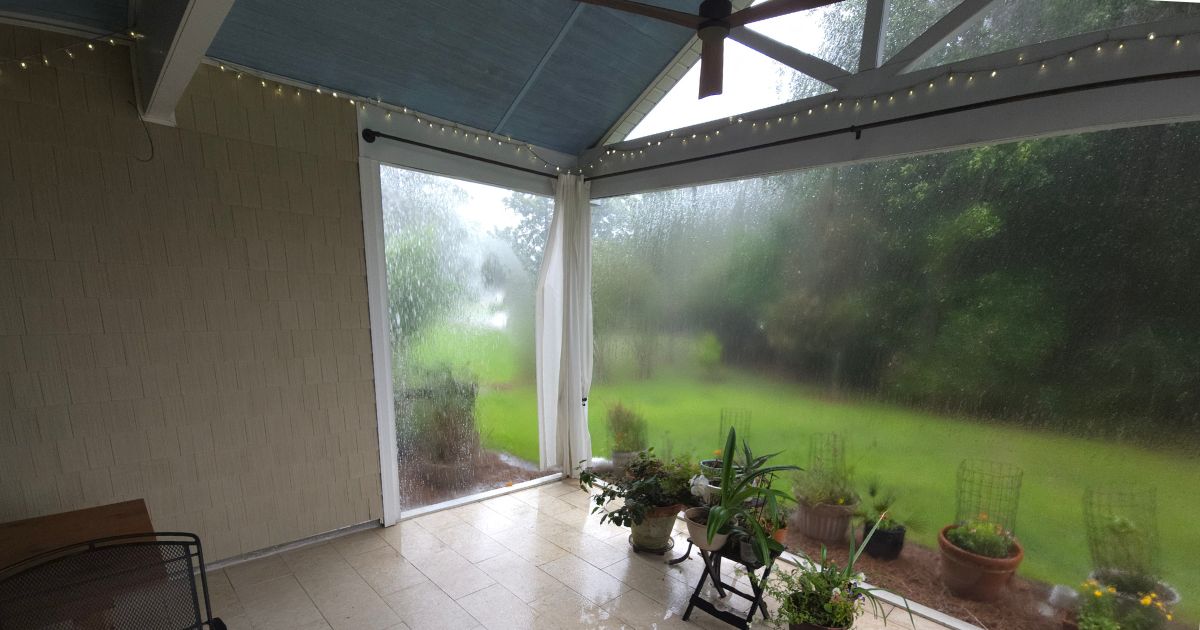
When we extended and enclosed this porch, I found that rain was bouncing off the concrete and soaking the OSB sheathing at the base. I added metal flashing along the bottom and a gutter where the roof valley dumps water. That is the kind of practical detail buyers need to think about here.
What Good Maintenance Looks Like
A well-maintained coastal home isn't just a home that looks nice. It's a home where someone has been paying attention to the systems that coastal climates stress.
Signs of a well-maintained home:
- Roof that's been replaced on a reasonable schedule, with documentation
- HVAC that's been serviced annually, with records
- Crawl space that's dry, properly ventilated, and monitored for moisture
- Active termite bond with a reputable local company and reasonable coverage limits
- Exterior paint and caulk that's in good condition, redone on a regular cycle
- Gutters that are clean and properly directed away from the foundation
Gutters aren't required on Lowcountry homes and many don't have them, but they're often a good idea when water needs to be moved away from vulnerable areas.
Signs that a home may have been under-maintained:
- No records of roof age or HVAC service
- Damp, musty, or neglected crawl space
- No termite bond or bond that lapsed
- Paint peeling, caulk cracking, or soft wood at trim or around windows
- A long list of deferred items the seller describes as "cosmetic"
In a forgiving climate, some of these things can wait. In the SC Lowcountry, they tend to compound.
Buyer Takeaway
If you're buying in the SC Lowcountry, don't judge a home only by how it looks in listing photos. Pay close attention to roof age, HVAC age, crawl space condition, termite bond status, drainage, exterior maintenance, and insurance requirements.
Those items can affect your cost of ownership just as much as the purchase price.
The Upside
I want to be direct about something: I'm not trying to scare you out of buying here.
I live here. My family lives here. I think the SC Lowcountry is one of the best places in the country to make this kind of move.
But I've also watched buyers from New Jersey or Virginia close on a home that looked beautiful in photos and then spend their first two years writing checks they didn't expect to write. Usually because nobody told them what to look for.
A well-maintained home in Bluffton or Hilton Head is a joy to own. These homes are built for the lifestyle - the outdoor living, the water access, the mild winters, the pace of life.
The climate demands more attention than where most buyers are coming from. That's just honest.
The buyers who do best here are the ones who go in with their eyes open: ask the right questions before they close, factor real maintenance costs into their budget, and buy from a seller who's been taking care of the place.
That's what I help people do. You can also take a deeper look at what to watch for during a home inspection in the SC Lowcountry.
Talk Through It Before You Commit
If you're looking at a specific home or community and you want a straight answer on what you're actually buying into, call or text me at 843.247.9373.
I'd rather spend 20 minutes on the phone with you now than have you find out the hard way after closing.
You can also schedule a buyer consultation here - no cost, no obligation.
Carl Kratz | Broker & Realtor | Century 21 Integra Realty
Serving Hilton Head Island, Bluffton, Beaufort, Hardeeville, and Ridgeland
843.247.9373 | carl@SCLowcountryRealEstate.com | sclowcountryrealestate.com
Frequently Asked Questions
Do homes in Hilton Head and Bluffton hold their value long-term?
Yes - but maintenance matters more here than in most markets. Homes that have been properly maintained in desirable communities hold value well. Homes where deferred maintenance has compounded can be a different story.
How often do homes need to be repainted in the SC Lowcountry?
Exterior paint typically lasts 5-7 years here, depending on the home's orientation, proximity to saltwater, and the quality of the paint. Closer to the water, expect toward the shorter end of that range.
Keep in mind you don't paint vinyl, and fiber cement or concrete board siding is typically more like every 15 years.
Is wood rot a common problem in coastal SC homes?
It's common in homes that haven't been maintained well. Properly sealed and regularly inspected exterior wood can hold up fine. The problem is usually homes where caulk and paint have been allowed to fail over multiple cycles, letting moisture work in.
The most common place to find wood rot is around exterior door frames - especially at ground level where there's little protection from the elements.
Do I need a termite bond on every home I buy in the Lowcountry?
For any home I would feel comfortable recommending here, yes. It's not optional in this climate. Most sellers will have an active bond - if they don't, that's worth asking about before you proceed.
What's the biggest maintenance surprise for buyers from the Northeast?
HVAC replacement is usually the one that hits hardest. Buyers accustomed to 20-year system lifespans are surprised to find out 10-12 years is realistic here.
Budget for it proactively and it's manageable. Find out at the wrong time and it could be an expensive replacement you aren't ready for, starting at least at $6,500.