The Osprey Nest You Drive Under Every Time You Cross Onto Hilton Head
If you have ever driven across the bridge onto Hilton Head Island, there is a good chance you have passed right under an osprey nest without realizing it.
Most people are watching traffic, the marsh, the water, or that first glimpse of the island. They are not looking up at the powerline structures. But tucked into that man-made framework is one of the more interesting reminders of what makes the SC Lowcountry different.
The wildlife here is not hidden away on a tour route.
It is part of daily life.
That is one of the things I try to explain to people who are considering a move to Hilton Head Island, Bluffton, Beaufort, or the surrounding Lowcountry. You may come here for the water, the weather, the golf, the boating, or the slower pace. But after you live here for a while, you start noticing the smaller things: the wood storks in a lagoon, dolphins in a creek, egrets working the marsh edge, and ospreys flying overhead with fish in their talons.
According to HHI Osprey Watch, a Hilton Head area volunteer monitoring group with more than 50 volunteers watching and reporting osprey nest activity, there are 128 osprey nests listed in their monitoring system as of today.
That number tells you something. Ospreys are not rare here. They are not hiding. They are woven into the landscape, the same way live oaks, tidal creeks, and salt marsh are.
If you live anywhere near water in the Lowcountry, there is a good chance you live closer to an osprey nest than you realize.
What You Are Actually Looking At
Ospreys are often called fish hawks, and that nickname is about as accurate as it gets.
Fish make up almost their entire diet. They hunt over rivers, creeks, ponds, lagoons, marshes, and open water, usually circling or hovering before dropping feet-first toward the surface. They do not catch a fish every time, but when they do connect, they often fly off holding the fish headfirst. That is not by accident. Carrying the fish that way reduces wind resistance, which matters when you are flying home with dinner.
Once you know what to look for, ospreys are fairly easy to identify. They are large birds, with wingspans around five feet. They have a white head, white underside, dark back, and a dark stripe through the eye. People sometimes confuse them with bald eagles, but the underside is one of the easiest clues. Bald eagles are darker underneath. Ospreys show much more white.
They also have a distinctive way of flying. Their wings often look long and slightly bent, almost like a shallow “M” when they are soaring overhead.
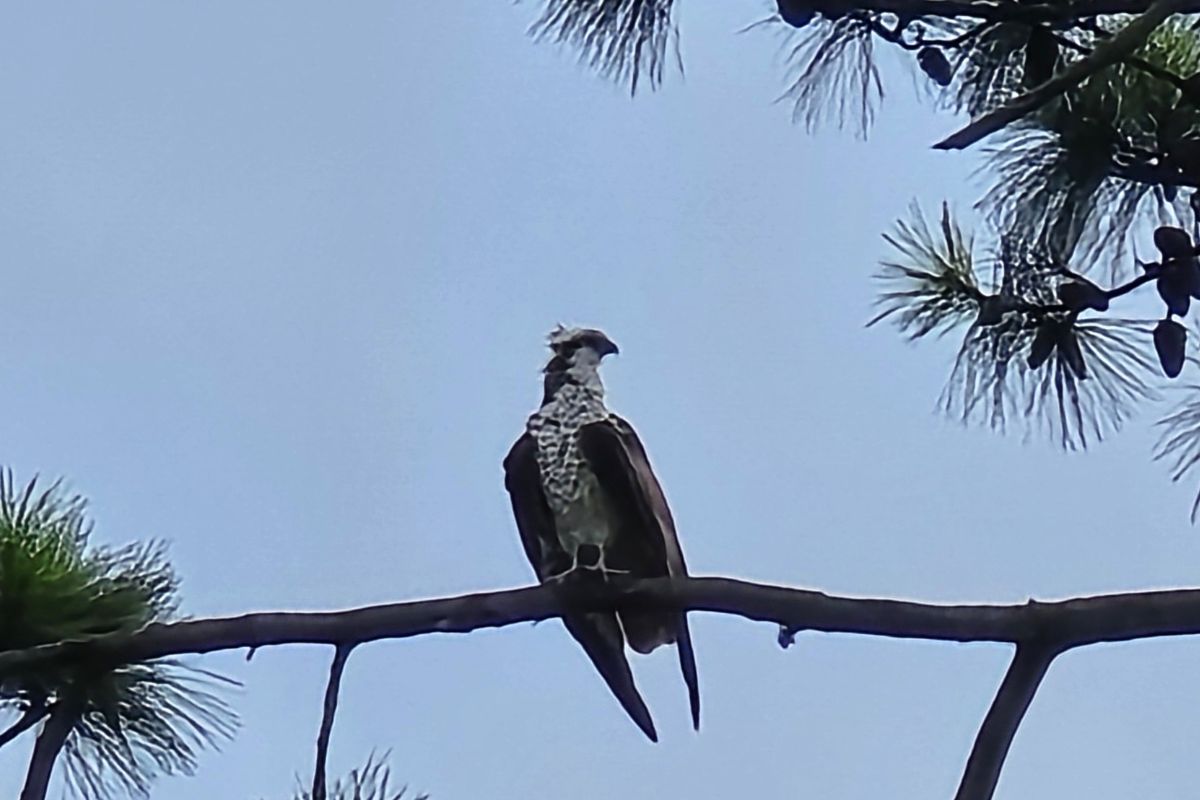
I recently photographed an osprey near an active nest on Bluffton Parkway, and it was a good reminder of how common they really are here. You do not have to go deep into a wildlife refuge to find them. Sometimes they are perched near a road you drive every week.
Why They Build Where They Build
Ospreys nest near water because their food source is nearby. But they also need height, visibility, and a clear approach to the nest.
That is why you see osprey nests on:
- Utility poles
- Channel markers
- Dock pilings
- Dead trees
- Nesting platforms
- Bridge and powerline structures
- Communication towers
- Light poles and other tall man-made structures
The powerline structure near the Hilton Head bridge makes sense from an osprey’s point of view. It is tall, open, protected from most ground predators, and close to productive fishing water.
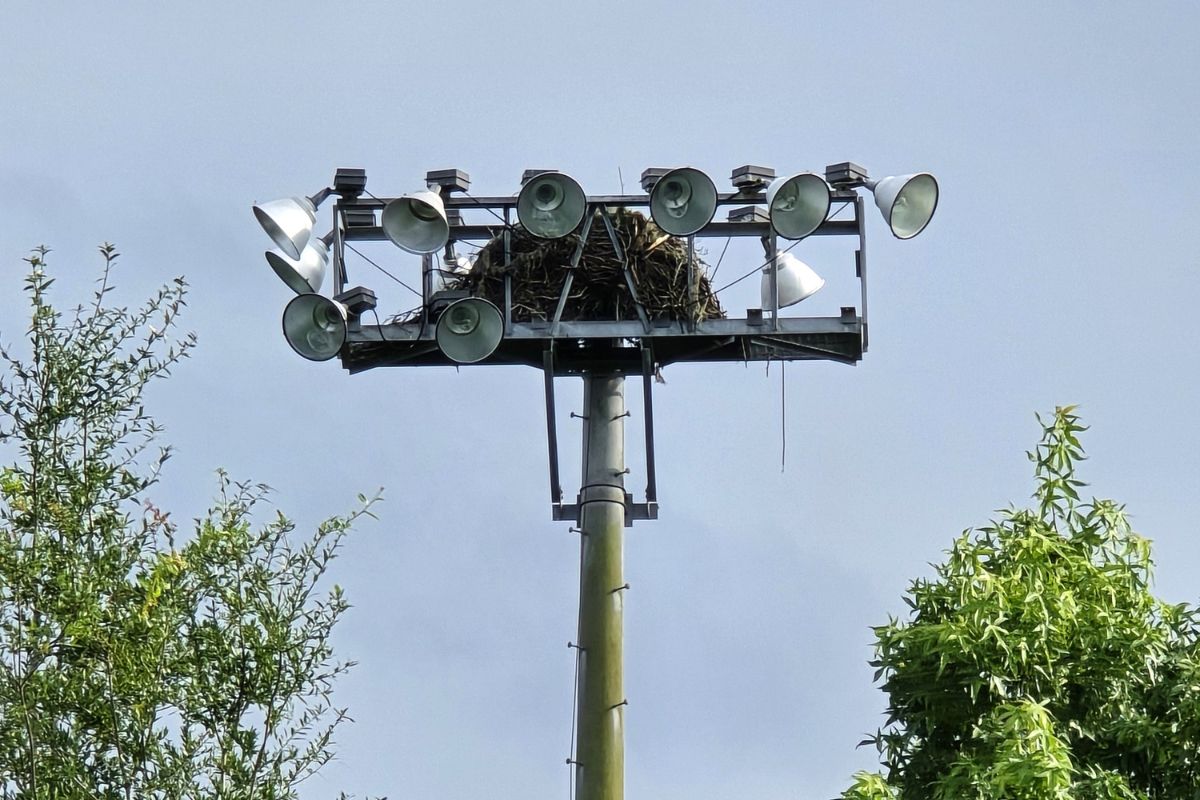
The same thing is true of the active nest I photographed on Bluffton Parkway. To most people, it may look like a light pole or utility structure. To an osprey, it is a high, open platform close to water, marsh, lagoons, and fish.
Their nests are not small, either. Osprey nests are built with sticks and lined with grasses, bark, vines, marsh material, and sometimes debris they find nearby. When a pair returns to the same nest site year after year, the nest can grow dramatically. Over time, mature osprey nests can become large, heavy, and very noticeable.
That is one reason utility providers and wildlife groups pay attention to them. In the right location, an osprey nest can be a great thing. In the wrong location, especially around active utility equipment, it may create a safety issue that has to be handled properly.
The Comeback Story
Ospreys are also one of the better wildlife comeback stories in the United States.
In the mid-1900s, DDT and similar pesticides worked their way up the food chain and caused serious problems for birds of prey. For ospreys, one of the biggest issues was eggshell thinning. Eggs became too fragile to survive normal incubation, and populations crashed in many areas.
DDT was banned in the United States in 1972, and osprey numbers gradually rebounded. Today, seeing ospreys throughout the Lowcountry is a reminder that clean water, healthy fisheries, and practical conservation work matter.
The Lowcountry gives ospreys exactly what they need: shallow fish-filled water, open marsh, tidal creeks, rivers, lagoons, and plenty of elevated nesting sites.
When to Look for Ospreys in the Lowcountry
Ospreys are most noticeable here from late winter through summer.
By early spring, many pairs are back around their nest sites. After that, you may see them bringing sticks to the nest, calling overhead, incubating eggs, delivering fish, or watching young birds learn to fly and hunt.
The nesting timeline is fairly long. Incubation lasts a little more than a month, and the young remain in the nest for several more weeks before fledging. That means spring and early summer are usually the best times to watch active osprey families around Hilton Head, Bluffton, and Beaufort.
If you are moving here during that time of year, there is a good chance your first Lowcountry spring will include seeing ospreys raise young somewhere nearby.
Why This Matters If You Are House Hunting Here
I am not telling you this because every buyer needs to become an osprey watcher.
I am telling you because this is part of the answer to a question buyers ask me all the time:
What does it actually feel like to live here?
This is part of what it feels like.
One evening after dinner, my wife and I were walking through our community when we watched an osprey drop out of the sky from what looked like nearly 100 feet up. It hit one of the lagoons just a few feet off the bank, grabbed a fish, and flew off almost immediately.
It was impressive how fast that bird could move, hit the water, and then recover like nothing happened. It felt like we were watching an episode of Wild Kingdom live, right in the middle of an ordinary evening walk.
That is the kind of thing people do not always understand before they move here. In the Lowcountry, wildlife is not something you only see on a planned tour. Sometimes it shows up between dinner and getting the mail.
Ospreys are not the only birds of prey we see here, either. Around the Lowcountry, we also see different hawks and eagles, especially near open water, marsh edges, lagoons, and wooded areas. But ospreys stand out because their hunting is so closely tied to the water, which makes them feel especially connected to the Lowcountry lifestyle.
You may be standing on a dock behind a home in Bluffton and see an osprey drop into the creek. You may be driving through a Hilton Head community and spot a nest on a dead pine. You may be touring a waterfront property and hear that sharp osprey call before you ever see the bird. You may cross onto Hilton Head Island a hundred times before someone finally points out the nest above you.
That is the Lowcountry.
It is not staged. It is not just a postcard. It is daily life here.
Of course, when you are buying a home, you still need to pay attention to the practical side: flood zones, insurance, HOA fees, taxes, short-term rental rules, club dues, resale value, and total cost of ownership.
But lifestyle matters too.
For many people relocating from the Northeast, Mid-Atlantic, or Midwest, this connection to nature is one of the reasons the Lowcountry feels different. You are not just buying square footage. You are buying a setting.
And sometimes that setting includes an osprey flying over the marsh with a fish in its talons.
Frequently Asked Questions About Ospreys in the SC Lowcountry
Are ospreys dangerous to people or pets?
No. Ospreys eat fish almost exclusively. They are not interested in people, dogs, cats, or household pets. Like most nesting birds, they may become protective if someone gets too close to an active nest, but they are not a threat to people going about normal life nearby.
Can a property owner remove an osprey nest?
Ospreys are protected under federal migratory bird laws. Active nests with eggs or chicks should not be disturbed or removed without proper authorization. If a nest creates a real safety or utility issue, the right step is to contact the appropriate utility provider, wildlife agency, or qualified professional. This is not something a homeowner should handle casually.
Will an osprey nest near my home affect my property?
In most cases, no. Osprey nests are typically found on utility structures, pilings, dead trees, channel markers, or platforms rather than on homes themselves. If you are buying waterfront property, it is worth asking about nearby nests, mainly because they are part of the setting and may be interesting to watch.
Where is the best place to see osprey nests around Hilton Head and Bluffton?
Look near water. Marinas, tidal creeks, bridges, docks, lagoons, golf course ponds, and waterfront neighborhoods are all good places to spot ospreys. The bridge crossing onto Hilton Head is one of the more familiar examples because so many people pass under or near that nest without noticing it.
You can also spot them in everyday places around Bluffton. I photographed an active nest on Bluffton Parkway, along with an osprey perched nearby, which is a good example of how visible they can be once you start looking up.
For anyone interested in local nest activity, HHI Osprey Watch is a helpful resource. Their monitoring group tracks osprey nests in the Hilton Head area, with more than 50 volunteers contributing observations.
Do ospreys stay in the Lowcountry all year?
Most ospreys in this area are most visible from late winter through summer and many migrate south after the breeding season. Some sightings can happen outside that window, but spring and early summer are usually the best times to watch nesting activity.
Final Thought
One of the best parts of living in the SC Lowcountry is that nature has a way of showing up in ordinary moments.
You do not have to plan a special trip to see it. You may notice it while crossing a bridge, walking a neighborhood trail, standing on a dock, or touring a home.
The osprey nest near the Hilton Head bridge is a good reminder of that.
Most people drive right under it.
The Lowcountry gives you plenty of reasons to look up.
Local osprey monitoring credit: HHI Osprey Watch, a Hilton Head area volunteer monitoring group that tracks osprey nests and reports local nest activity.
Thinking about what daily life actually looks like in the Lowcountry beyond the listings? I talk with relocation buyers about this all the time. The house matters, but so does the setting around it.
Thinking about moving to Hilton Head, Bluffton, Beaufort, or the SC Lowcountry?
I help buyers understand more than just the house. Flood zones, insurance, HOA fees, taxes, resale value, lifestyle, and the setting around the home all matter.
If you are considering a move to the area, reach out anytime.
Carl Kratz
Broker & Realtor
Century 21 Integra Realty
843.247.9373
carl@SCLowcountryRealEstate.com